2026 CenCal APA Sierra Retreat Recap
August 21-23, 2026
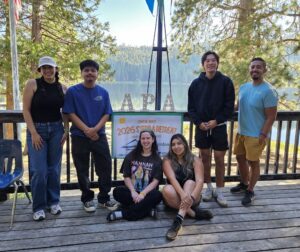
What a fantastic weekend at this year’s CenCal APA Planning Camp! Set against the beautiful backdrop of Sequoia Lake in Kings Canyon National Park, planners, families, and friends came together for a weekend filled with learning, laughter, and plenty of outdoor fun.
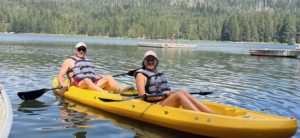
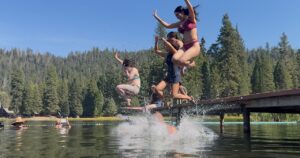
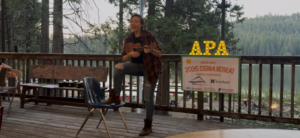
Of course, the camp traditions were alive and well. Attendees enjoyed campfires, s’mores, sing-alongs, boating, kayaking, swimming, pickleball, hiking, Bingo, and the always-entertaining talent show. A special thank you goes to Sierra Retreat Coordinators Carolina Ilic, AICP, of VRPA Technologies; Karl Schoettler of 4Creeks; and Jenna Chilingerian, AICP, of Precision Civil Engineering, for organizing another memorable event.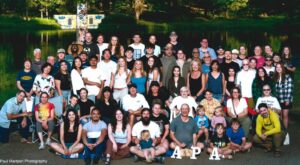
This year’s professional session focused on one of the most talked-about planning topics today: AI Data Centers in the Central Valley (CM #9333578). As demand for generative AI continues to grow, so does the need for large-scale computing infrastructure. The Central Valley, with its available land, transportation access, and expanding energy infrastructure, is viewed as a potential hub for AI-related development, whether we are ready or not.
The discussion began by defining the different kinds of AI data centers currently in place and discussing the locations of existing centers and planned AI data centers. The discussion explored a wide range of planning questions, including how AI and generative AI are used, how AI data centers differ from traditional facilities, whether the Central Valley should actively pursue these projects, and how local governments can – and proactively should – prepare for future applications. Conversation also centered on land use and zoning considerations, environmental review, energy demand, water usage, economic development opportunities, and community benefits. Participants examined emerging projects such as the AI data center underway at NAS Lemoore and proposals being discussed in Tulare County, while considering how planners can help communities separate facts from fears and make informed decisions about this rapidly evolving industry.
The session was moderated by Carolina Ilic, AICP, Principal Transportation Planner with VRPA Technologies and Sierra Retreat Coordinator, and Jonnie Hanson Lan, AICP, Community Development Director for the City of Atwater and Central Section APA Director.
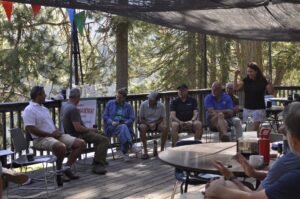

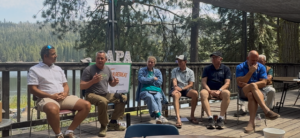
Panelists included Marc Mondell, ICMA-CM, AICP, City Manager of Tulare; Tod Sword of Southern California Edison; Dr. Aly Tawfik of Fresno State Transportation Institute; Eric VonBerg of Rincon Consultants; and John P. Kinsey of Wanger Jones Helsley PC. Collectively, the panel brought expertise in economic development, infrastructure, transportation, environmental review, land use planning, and law.
One theme that emerged throughout the conversation was that AI technology and the infrastructure supporting it are changing at an incredibly fast pace, and that what was true about AI data centers two or three years ago is very different than today. For example, the space required for computing power is shrinking exponentially, water needs for cooling are being adapted, and energy needs and impacts may be very different than currently portrayed in community discussions.
Many attendees agreed that local governments should begin thinking proactively about policies, zoning regulations, infrastructure needs, and potential community benefit agreements so that local communities can proactively help shape future outcomes rather than simply reacting to AI data center proposals. Questions about water use, grid capacity, workforce development, environmental impacts, and long-term economic benefits generated thoughtful discussion and highlighted the important role that city planners will and should play, in addition to the role of economic development professionals, as these applications become more common across the region.
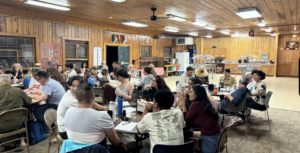
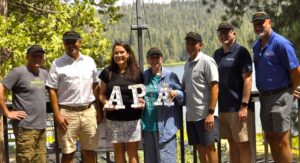

Beyond the professional session, some of the best conversations happened around the campfire, during kayaking and canoe rides, over shared meals, and while relaxing lakeside. For more than 30 years, Planning Camp has provided a unique opportunity for planners from across the region, and even across the state, to connect, exchange ideas, and recharge. Whether attending for professional development, networking, family fun, or simply a weekend in the mountains, participants once again demonstrated what makes the planning community so special.
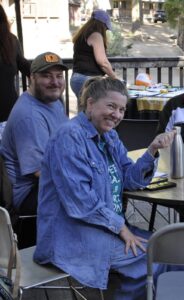
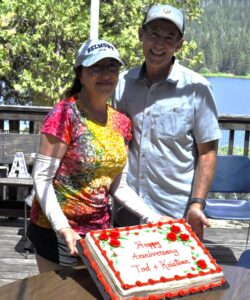 A special event this year was the celebration of the 29th wedding anniversary of one our speakers, Tod Sword. We celebrated Tod and Kristina with delicious cake, thoroughly enjoyed by the anniversary couple and all campers!
A huge thanks to this year’s sponsors: VRPA Technologies, Inc.; Verdant; ECORP Environmental Consulting; Provost & Pritchard; and Rincon Consultants. Our sponsors help make camp possible!
If you missed Planning Camp this year, we hope you’ll join us next August. This treasured Sierra Retreat tradition continues to grow, and every year brings new opportunities to learn, reconnect, and enjoy the beauty of the Sierras with fellow planners and their families. We’re already looking forward to next year!
Presentation Summary: AI Data Centers in the Central Valley
View shared Camp Photo through this Google link: https://photos.app.goo.gl/5SYCbHxxkujXi4baA
About the Annual Sierra Retreat
Hosted annually by the Central Section in late August at Camp Sequoia Lake, located just 2 miles before the entrance of Sequoia/Kings Canyon National Park in Central California’s beautiful Sierra Nevada region; the Sierra Retreat offers a weekend getaway for APA members, their families and guests, to experience cherished time in the outdoors enjoying hiking, fishing, kayaking, swimming, campfires and relaxation in a natural setting. On Saturday morning, a professional development session (discussing a planning topic of interest) is presented, which allows for AICP credits. All meals and lodging are included with registration. We would love to see you at the Lake!
Program Highlights for 2026 Sierra Retreat
AI Data Centers in the Central Valley
In September 2025, Ameresco, CyrusOne, and the U.S. Navy announced a 100 MW AI-optimized data center at Naval Air Station Lemoore in Kings County, California — with a Phase 1 opening target of 2027. The facility will be co-located with a dedicated on-site microgrid, built by Ameresco, supplying grid-independent power to both the data center and the installation. It is designed to support large language model training, real-time AI analytics, and mission-critical federal computing at security levels that include FedRAMP, FISMA High, and Department of Defense Impact Levels 5 and 6. This is not a hypothetical future scenario or a coastal tech-sector story. It is the Central Valley’s first major AI data center project — an active, consequential land use development in our region, being built right now. It is among the most significant industrial development decisions Kings County has faced in a generation, and it is the anchor case for the 2026 CenCal APA Sierra Retreat.
 The NAS Lemoore project is the leading edge of a national wave. The rapid increase of generative AI — the large language models (LLMs) behind tools like ChatGPT, Gemini, and dozens of enterprise AI platforms — requires enormous, specialized computing infrastructure. A single AI training run for a frontier model can consume as much energy as a small city. Data centers built to handle this workload typically range from 50 to 300 megawatts of electricity demand, consume millions of gallons of water annually for cooling, and generate significant heat, noise, and round-the-clock operational activity. The Central Valley’s combination of available land, major highway access, proximity to federal installations, and a developing energy infrastructure makes it an increasingly attractive target for additional projects well beyond NAS Lemoore. Planners across the region — in Kern, Tulare, Hanford, Visalia, Bakersfield, Fresno, Madera, Merced, and others — should expect to see these applications arrive in their inboxes.
When they do, the planning profession will be on the front line. And the hard truth is that most general plans, zoning codes, and CEQA initial study checklists were not built with AI-scale data centers in mind. What land use designation does a 100 MW facility fall under — heavy industrial? Light tech? Something else entirely? Does it belong in an existing industrial zone, a specific plan area, or on a mixed federal-private campus like NAS Lemoore? What are the thresholds that trigger a full environmental impact report rather than a mitigated negative declaration? How do host communities negotiate community benefit agreements with sophisticated national developers when they have limited staff, limited legal resources, and limited precedent to draw on? How do planners structure conditions of approval for a use type with no established local standards? These are not abstract policy questions. They are arriving in planning department’s inboxes right now, and planners need practical answers.
The energy picture is equally complex. Southern California Edison serves the NAS Lemoore area, and SCE’s representative Tod Sword will address how the regional grid absorbs large new loads of this scale — and what the realistic timeline and cost structure looks like for a major interconnection request. At NAS Lemoore, Ameresco is providing dedicated on-site generation in the form of a microgrid, giving the data center grid independence. That model has significant implications: as more facilities install their own generation, the relationship between large industrial users and the surrounding grid changes — raising questions about grid stability, ratepayer cost-sharing, and whether communities adjacent to these projects benefit from or bear the burden of the associated infrastructure investment. Central Valley communities already contend with some of California’s highest residential energy costs and persistent energy access inequities in agricultural and disadvantaged areas. A 100 MW data center drawing on regional grid capacity raises real questions about who pays for the infrastructure and who receives the benefits.
Water is the other major flashpoint. Large AI data centers relying on traditional evaporative air cooling can consume three to five million gallons of water per day — a staggering burden in a region already under acute water stress from agricultural  demand, prolonged drought, and groundwater depletion regulated under California’s Sustainable Groundwater Management Act (SGMA). California’s CEQA process is designed to surface and mitigate significant environmental impacts, but existing significance thresholds were not calibrated for facilities of this scale. Lead agencies conducting environmental review for data center projects are navigating largely uncharted territory when it comes to water supply analysis, heat island effects, noise from cooling systems and backup generators, and cumulative air quality impacts. Newer direct liquid cooling (DLC) technologies dramatically reduce water consumption, but adoption is uneven and standardized mitigation requirements do not yet exist in most local CEQA checklists.
The economic development story is more nuanced than the press releases suggest. Data centers generate substantial property tax revenue, significant construction employment, and — for some communities — meaningful infrastructure investment. But permanent operational employment for a 100 MW facility is typically small: 20 to 50 highly specialized positions that may not be accessible to the local workforce without targeted training and hiring commitments. The servers, software, andintellectual property that generate the project’s real economic value are owned by the operator and captured farhttps://www.cencalapa.org/wp-content/uploads/2026/06/NAS-300×200.jpg from the host community. For small and mid-sized Central Valley cities — Lemoore, Tulare, Hanford — negotiating development agreements and community benefit agreements with well-resourced national developers requires planning expertise, legal support, and technical assistance that many jurisdictions simply do not have. Getting this right matters. The decisions made on early projects will set precedents for the wave that follows.
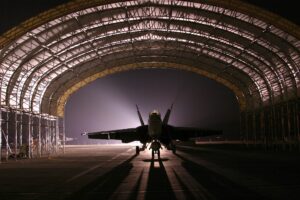
The 2026 CenCal APA Sierra Retreat will bring together city managers, utility representatives, urban planners and environmental consultants, attorneys, and AI research experts for a candid, practitioner-focused conversation about what AI data center development means for the Central Valley — and what planners can and should do in response. Featuring the NAS Lemoore project as a concrete anchor case, the session will move from project-level specifics to region-wide policy questions, covering land use and zoning, environmental review, energy and water infrastructure, economic development, public input, the emerging role of AI tools in the planning practice itself, and the possibility of AI data centers in space. Set against the backdrop of Sequoia Lake in Kings Canyon National Park, this is an opportunity to engage with one of the most consequential land use issues of the decade alongside the colleagues, city managers, and subject-matter experts who are living it in real time.
Come ready to ask hard questions. We look forward to seeing you there!
Highlights from the 2025 Sierra Retreat
What happens when you bring together fellow planners, their families, and professionals knowledgeable about planning for California Wildfires? You get the “spark” of CenCal APA’s Sierra Retreat!
All kidding aside, the 2025 Sierra Retreat was a huge success! With over 30 years of “Planning Camp” weekends, newcomers and old-timers came together at the beautiful YMCA Camp Sequoia Lake for a reprieve of everyday life. This year, we got to experience the beauty of nature, including an unexpected end-of-summer storm showcasing plenty of sky-wide lightning, roaring thunder, and tumultuous raindrops, requiring campers and staff to clear the chairs and tables from the outside dining hall deck! This, of course, led to lots of indoor activity, including games featuring Bananagrams, Uno, Chronology, playing cards, and many others. Once the thunderstorm cleared up, it was back to normal, with swimming, kayaking, and canoeing, as usual, followed by our second annual Talent Show, world-famous Bingo, and never-to-be-missed campfire and smores.
Prior to our spectacular weather event, planners, fire professionals, and community leaders came together for an energizing and timely discussion on one of California’s most pressing challenges: Wildfires. Entitled “California Wildfires: Planning Strategies for Recovery, Resilience, and Future Protection,” this outdoor workshop provided an opportunity for reflection, learning, and forward-thinking collaboration.
Against the backdrop of the devastating wildfires in Southern California earlier this year—which claimed 29 lives, forced more than 200,000 evacuations, and destroyed over 18,000 homes—participants looked both backward and forward. Stories from past events like the 2020 Creek Fire in the Sierra National Forest and last year’s Borel Fire in Kern County reminded attendees of the urgency to rethink how communities are built, protected, and rebuilt in fire-prone landscapes.
The panel featured a powerhouse lineup, including CAL FIRE Battalion Chief David Acuna, and planning experts Erik De Kok, AICP, Ascent; Aaron Pfannenstiel, Atlas Planning Solutions; and Eric VonBerg, Rincon Consultants. Moderators Carolina Ilic, AICP, VRPA Technologies, and David Fey, retired planner, guided the conversation through critical themes: the role of defensible space, balancing housing density with fire-safe design, resiliency and equity issues related to recovery and adaptation, and the differing roles of local state, and federal responsibility areas for wildfire management.
Attendees didn’t just listen—they engaged. The panelists tackled tough discussion questions, intermingled by comments, observations, and even more inquiries by attendees. Topics included: How can we reconcile the need for more housing with fire safety requirements? What’s the difference between hazard and risk, and how should it shape our planning? And perhaps most importantly, how can planners help communities rebuild equitably and resiliently after wildfires and ensure that recovery efforts do not leave disadvantaged communities behind?
Participants learned about available resources, including California’s “Zone 0” ember-resistant regulations, CAL FIRE’s newly released California Community Wildfire Protection Plan Toolkit, and Fire Hazard Severity Zone maps, as well as important websites, such as www.fire.ca.gov and www.readyforwildfire.org. Beyond these resources, though, what lingered was the resounding call to action for planners to be curious, reach out beyond silos, and connect to others at all levels to meet fellow colleagues, understand the issues from new perspectives, make connections that encourage unified approaches for true community building resilience, and work together to set up plans for pre-disaster recovery planning. The retreat went beyond learning, encouraging the building of professional networks to make California’s communities more fire-resilient, equitable, and prepared for the challenges ahead. For speaker bios and email addresses, scroll further below. If you attended the session, make sure to log your 2.5 AICP CM Credits, including 1 credit for Sustainability Resilience: #9315001.
The Sierra Retreat is our section’s signature event. If you’ve never been, mark your calendars to join us next summer (always the last or second-to-last weekend in August). A huge thanks to our sponsors: Provost & Pritchard, VRPA Technologies, and 4Creeks, and to our Sierra Retreat Coordinators, Carolina Ilic, Karl Schoettler, and Jenna Chilingerian. There’s nothing like Planning Camp and we can’t wait to see you there in 2026!
2025 Program Abstract with Speaker Biographies
2025 Sierra Retreat Google Photo Album
For additional information, please contact Sierra Retreat Coordinator, Carolina Ilic, AICP
Highlights from the 2024 Sierra Retreat: What a great and fun weekend had by all high in the Sierra mountains. Check out our first-ever imovie of CenCal APA Sierra Retreat at Sequoia Lake, aka fondly known as, “Planning Camp!” We engaged in our usual fun at the lake that included campfires, smores, sing-a-longs, boating, and BINGO, plus a new activity that was an instant hit – a talent show. Don’t worry…if you plan to attend next year, the talent show is completely voluntary! A special thank you to our co-planners, Carolina Ilic and Karl Schoettler, our committee members, attendees, and Sponsors – Precision Civil Engineering, Rincon Consultants, Sigala, Inc., VRPA Technologies, Provost & Pritchard, and 4Creeks for making this event a success.
Photos from the Retreat (Click to View Album)
Trials and Tribulations of Planning New Towns and Cities (Click to Add to CM Log)
For additional information, please contact Sierra Retreat Coordinator, Carolina Ilic, AICP